Pre-order now
exocortex
1,118 gold contacts. One ordinary beanie.
$5,000 + tax, free US shipping. The first 100 ship in December 2027.

The film.
Seventy seconds: the founder, the helmet as its CAD files have it, and what it is for.
A beanie on the outside.
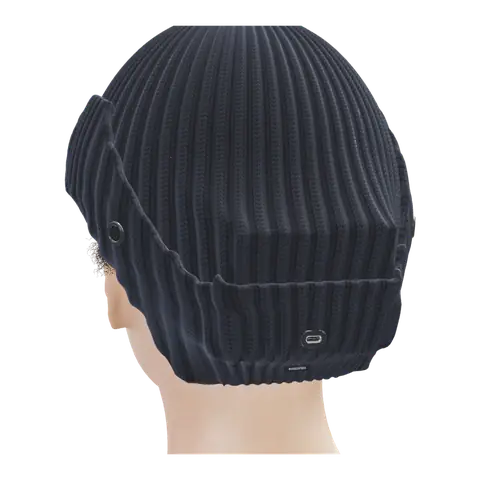
An ordinary acrylic rib-knit beanie goes over the shell, the boards and the hub. Inside the shell, a printed headband on a foam pad runs round the brow and under the back of the head, closed by a ratchet at the nape: it holds the shell down against the pins with 31 N of tension. The five camera lenses come through the knit, where you and the people around you can see them.
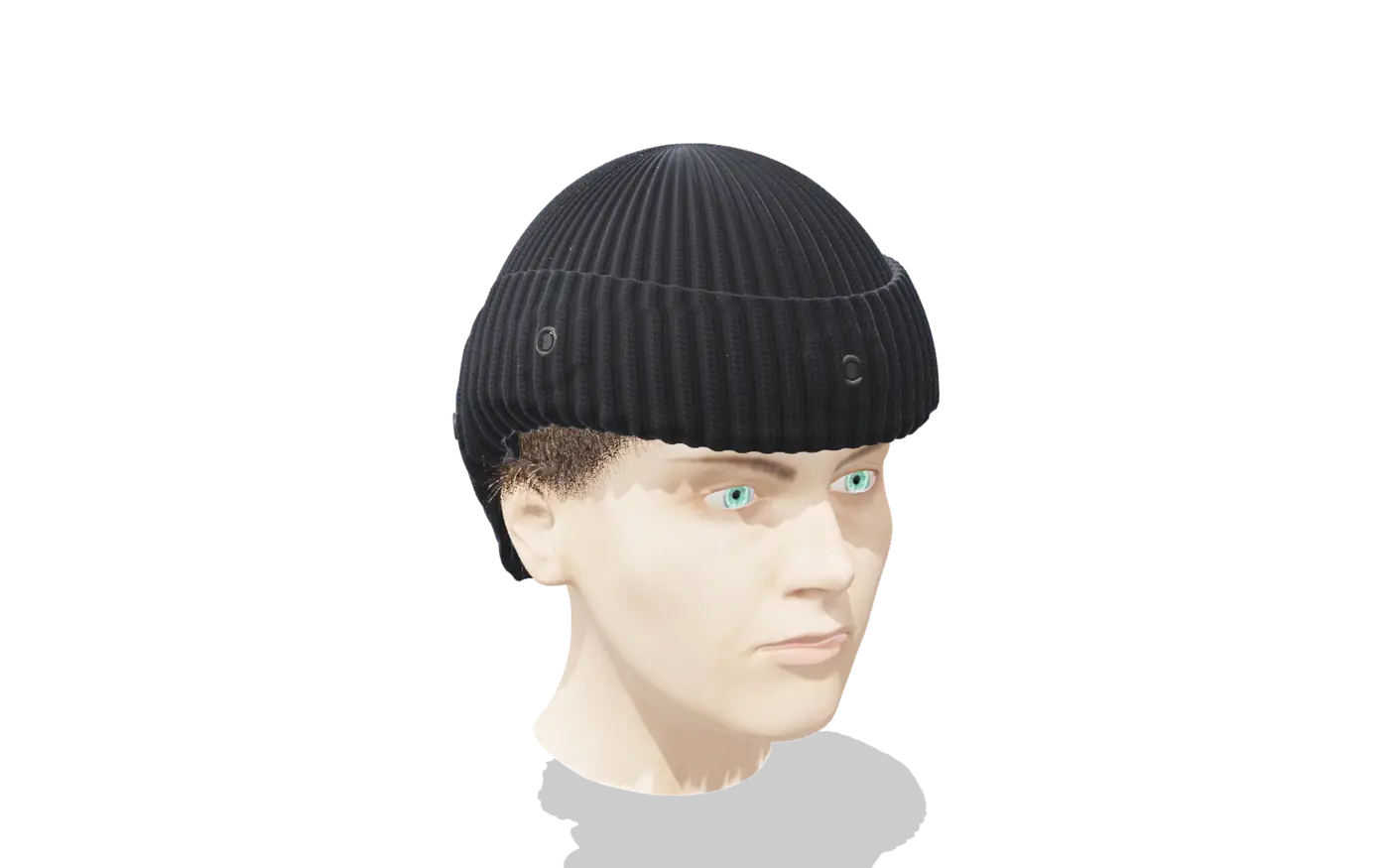
No gel. No paste. No cap.
1,118 gold-plated pogo pins press through the hair onto the scalp, each with 2 mm of travel. Every tile is small enough that all of its pins reach. A preloaded spring in every pin presses with 8.5–11.8 g, whatever its gap: 113 N on the whole head. Put it on dry, take it off clean.
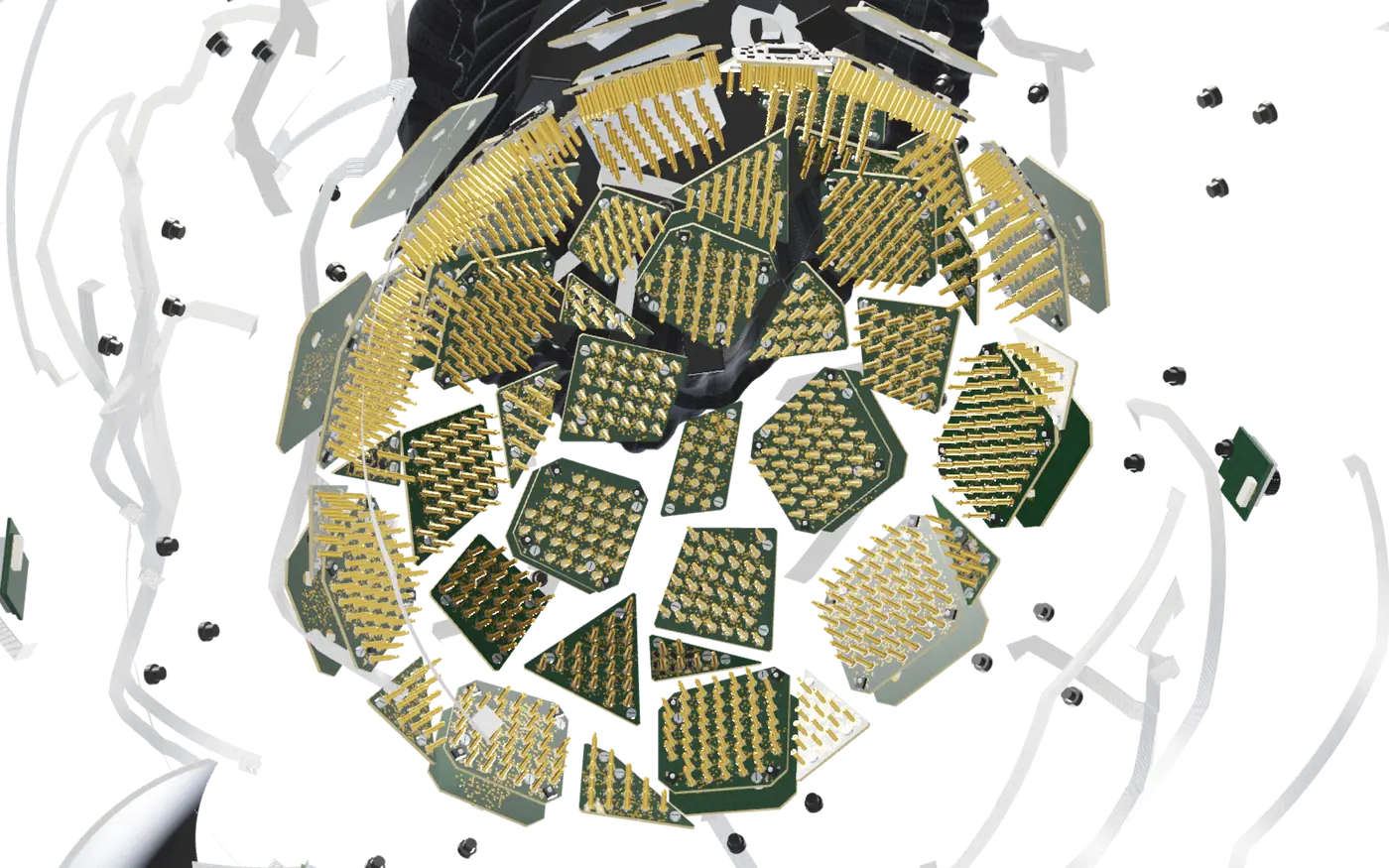
66 tiles. 9 designs.
Three rings of trapezoids follow the cuff, like the panels of a cap, and a top cut into territories closes it. Together they cover 71.7% of the scalp, and nearly every tile in a ring is the same board. Each one plugs into the next: 16 short chains to the hub.
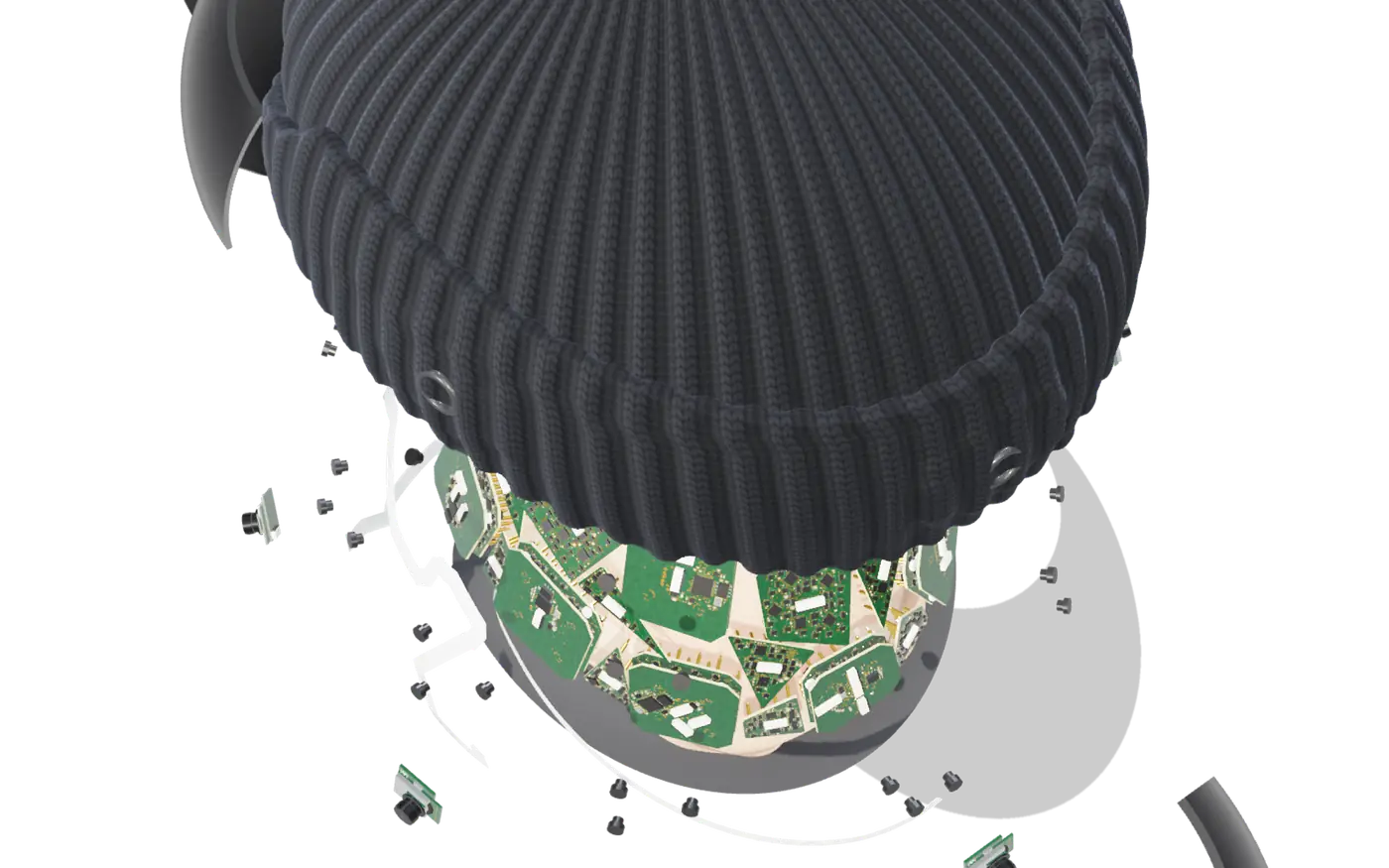
Gain of 101. 500 times a second. Every channel.
A zero-drift TLV333 amplifier behind every contact, against the reference contact, and a CH32V203 converter for every ten. All 128 converters share one clock and one sync line, so 1,118 channels are sampled together, within 24 ns of each other. One 12-bit step is 8 µV at the contact, averaged down to 500 samples a second.
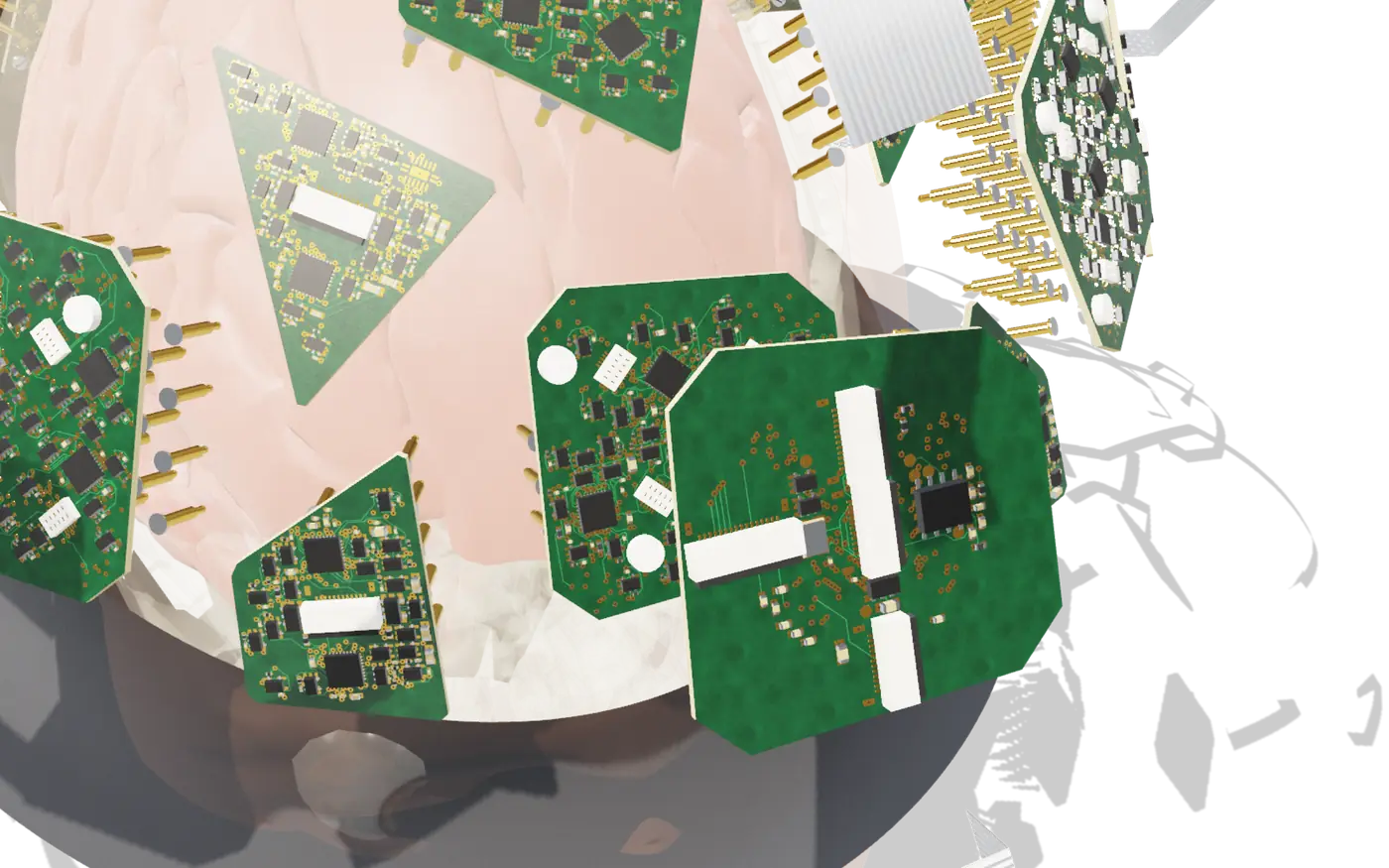
Sees what you see. Hears what you hear.
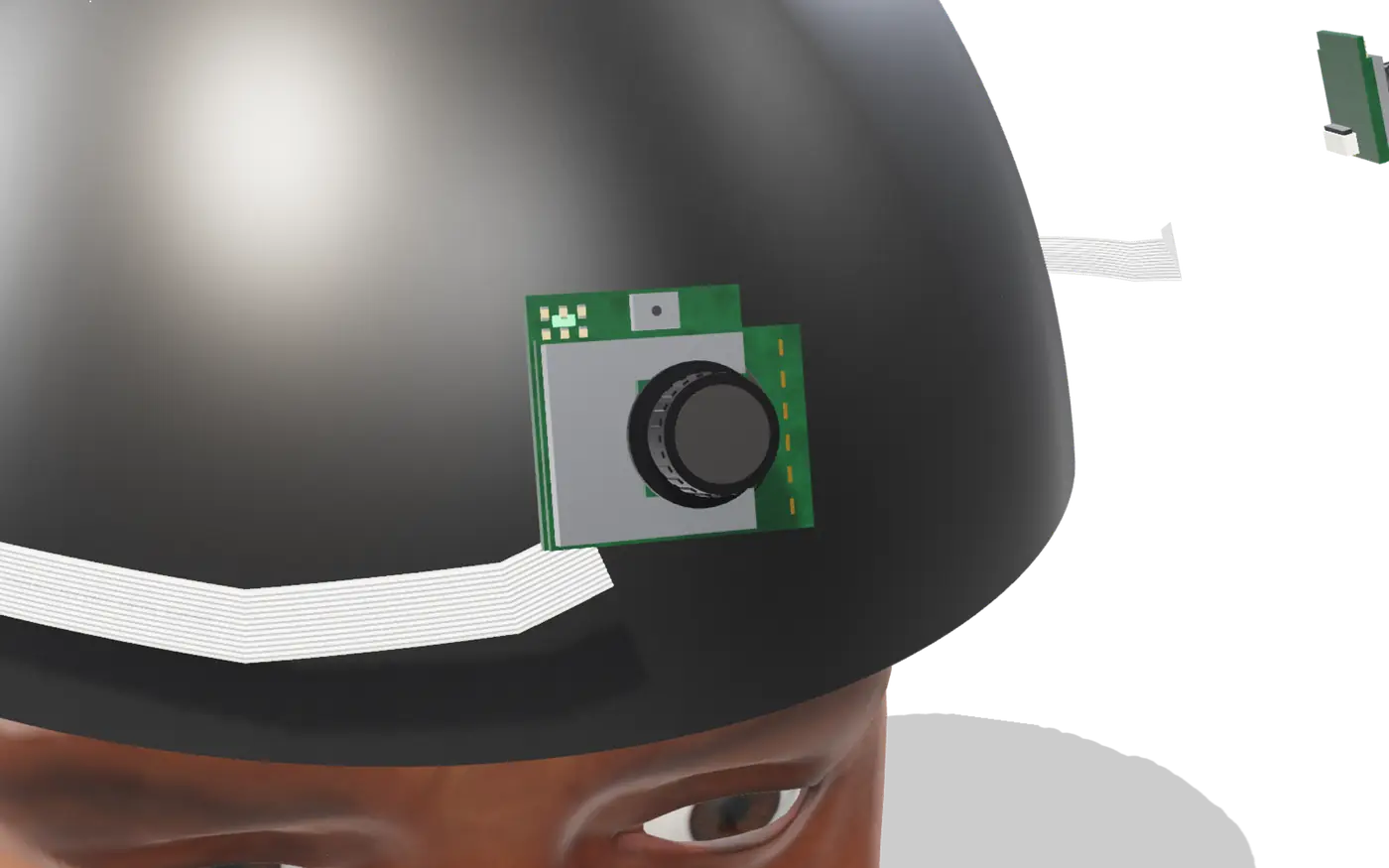
Five 2-megapixel cameras with 160° lenses in the cuff, three across the front and two on the back rim. Each has its own microphone. Video and sound go down the camera's cable to the hub; the cameras have no radio of their own. Each camera board has a light that is on whenever its sensor has power; the next revision moves it to where others can see it. Recording people has rules: terms of use.
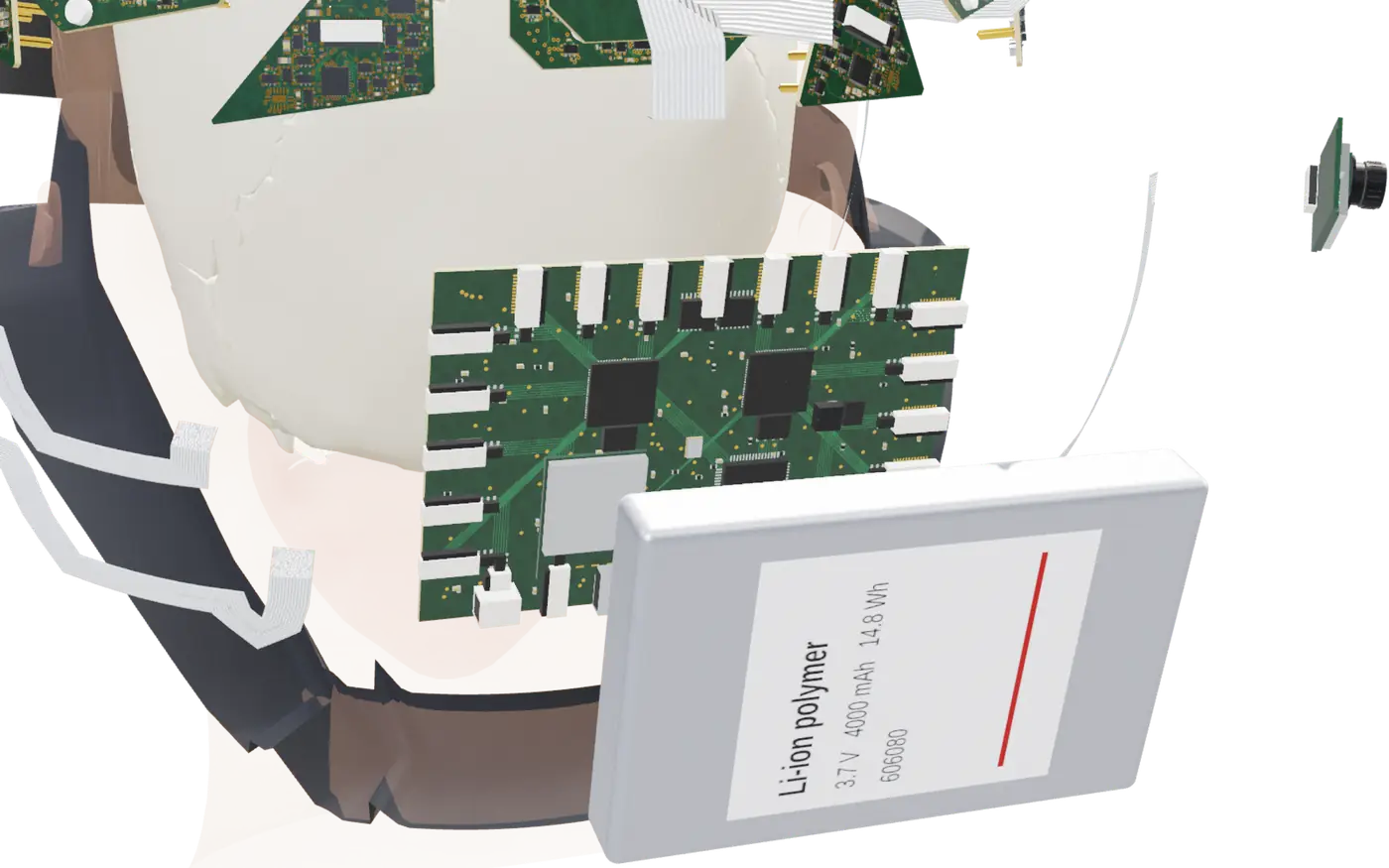
The hub.
At the back, under the pod: two RP2350s collect the chains and the five camera cables, an ESP32-S3 sends over Wi-Fi at 13 dBm, the helmet's only radio, and USB 2.0 High Speed carries everything to a computer. A 2000 mAh cell under the cover runs it for about 1.2 hours with every camera streaming, 2 hours with them off. It charges only off the head: plug in a cable and the contacts' supply switches off.
Take a closer look.
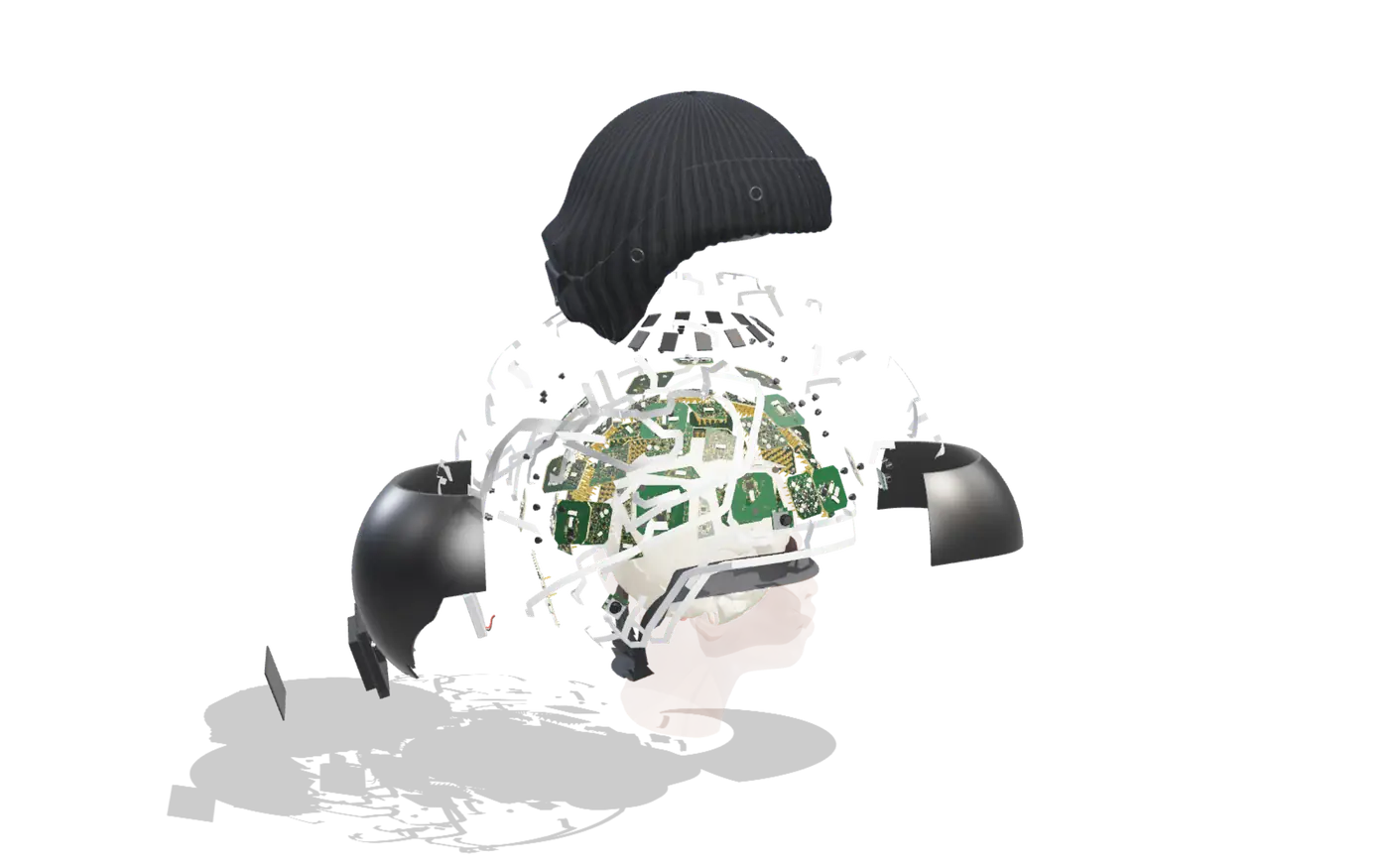
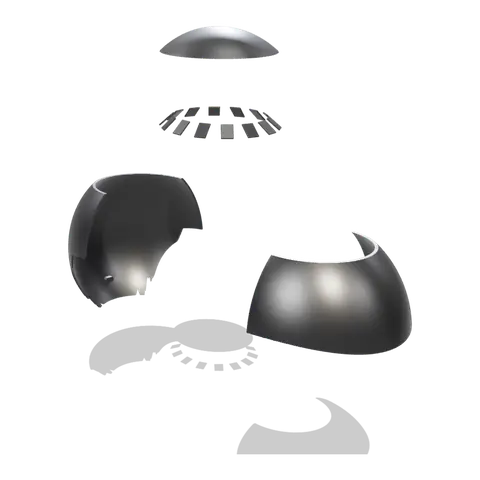
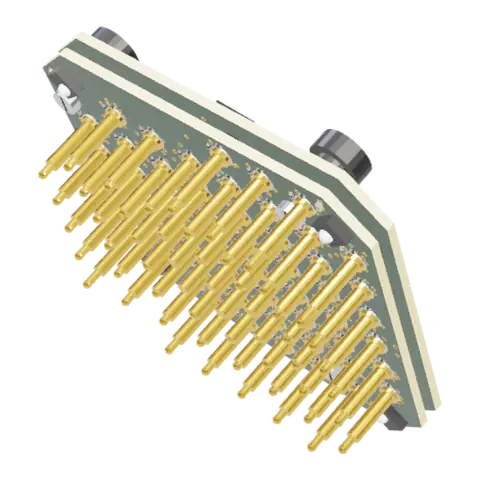
Stills of the live 3D model, rendered from the design files. Drag the shelf sideways.
By the numbers.
of spring on the whole head: 8.5–11.8 g a contact, preloaded.
of timing difference across all 128 converters, by design.
One radio, in the hub, 22 mm off the scalp. The cameras send over their cables.
at least, between every contact and the electronics: 18 µA at a tile's front end (the port's 3.6 V through a shorted LDO), 22 µA at the hub's reference and bias contacts on its 4.4 V battery rail (design values; not yet tested).
on a charge with all five cameras streaming; 2 hours with them off.
circuit boards: 66 tiles of 9 designs, a hub and five cameras.
USB 2.0 High Speed out of the hub.
One pogo pin on every contact, one connector on every cable, one beanie. Fewer parts, fewer ways to fail.
exocortex
Pre-order. $250 deposit.
A fully refundable $250 deposit holds your place for a $5,000 exocortex. We expect to ship the first 100 by December 2027. If we can't, we'll email you before then with a new date. You can cancel then for a full refund, and if you don't agree to the new date, we refund you.
Or build it yourself.
Every board, every part, every file is open. Order the boards from JLC, print the shell on an Ender-3, and put it together. One order builds one helmet, with a spare pair of every tile design, for $2,123.
Tech specs.
- Sensing
- 1,118 dry gold contacts, one channel each, over 71.7% of the scalp
- Front end
- a TLV333 zero-drift amplifier per contact, gain 101 against the AC-coupled reference contact; 128 × CH32V203 12-bit converters, 500 samples per second per channel
- Cameras
- 5 × OV2640, 2 MP, 160° wide-angle
- Connectivity
- 2.4 GHz Wi-Fi from the hub's ESP32-S3, the helmet's one radio; the cameras send over their cables and have no radio. All camera video goes over USB, a reduced set over Wi-Fi; USB-C, USB 2.0 High Speed (480 Mb/s) through an FTDI FT2232H
- Power
- 1S lithium-polymer, 2000 mAh, 3.7 V, under the pod cover; about 1.2 hours with all five cameras streaming, 2 hours with them off
exocortex is designed, routed and checked, and is not yet built. Specifications are design values; impedance, noise, motion, comfort and EMC have not been measured on a head. exocortex is not a medical device and is not for diagnosing, treating or monitoring any condition. Pre-orders take a fully refundable $250 deposit; the balance is charged only when your unit is ready to ship, and only if you agree then. This device has not been authorized as required by the rules of the Federal Communications Commission. It is not, and may not be, sold or leased, or offered for sale or lease, until authorization is obtained. exocortex is made by Exocortex Labs and sold by CommandAGI Inc.